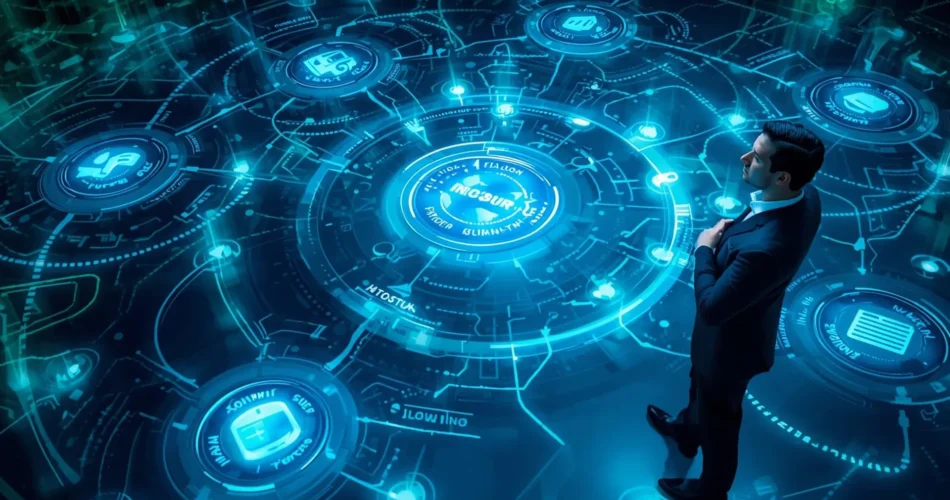
Your business runs on software. CRM for customer relationships. Accounting for finances. Project management for operations. Communication platforms for collaboration. Analytics for insights.
Each tool works well individually. But together, they create a productivity nightmare where employees spend hours manually moving data between disconnected systems.
This isn’t how technology should work. Tools purchased to increase efficiency end up creating more work through manual data transfers, duplicate entry, and information gaps that slow decision-making and reduce productivity.
The One-at-a-Time Purchase Problem
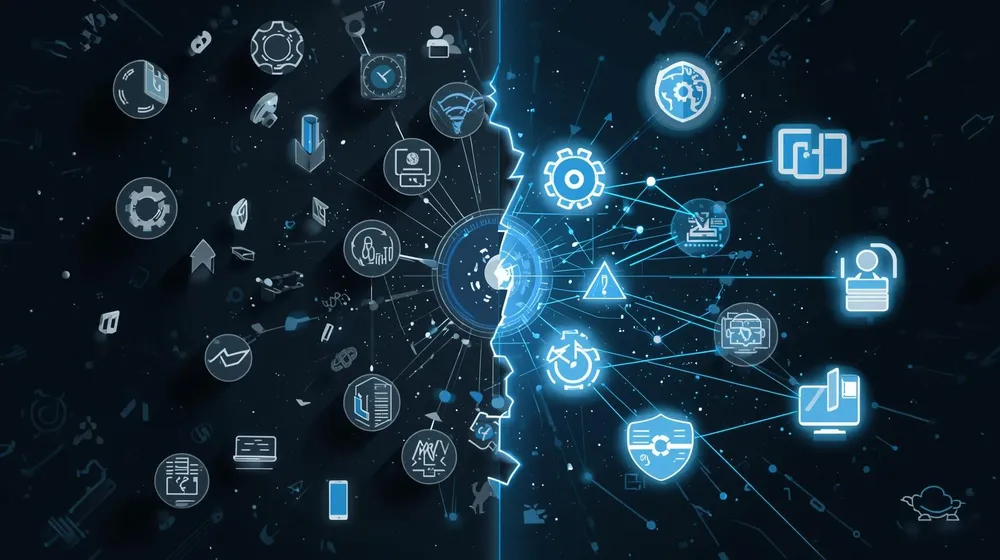
Most businesses acquire technology solutions reactively, addressing immediate needs as they arise without considering how new tools will integrate with existing systems.
Sales needs customer relationship management – purchase a CRM. Marketing wants better analytics – buy an analytics platform. Finance requires accounting software – implement a solution. Operations needs project tracking – find a tool that works.
Each purchase decision makes sense individually. But these isolated decisions create integration problems that become apparent only after implementation. Tools purchased separately rarely integrate smoothly. Vendors don’t coordinate with each other. Data structures don’t align between platforms. APIs might not exist or require expensive custom development.
Organizations discover these integration challenges after purchase when connecting new tools to existing platforms proves difficult or impossible, forcing them to accept manual workarounds or pay for expensive custom integration projects.
The Hidden Costs

Manual Data Transfer Tax
Employees export data from one system, reformat it, import it into another system, manually reconcile discrepancies, and repeat this process daily. Time spent on data transfer could be spent on productive work. Manual processes introduce errors. Decision-making gets delayed waiting for data compilation.
Information Fragmentation
Sales teams track customer interactions in CRM systems but don’t have visibility into outstanding invoices. Billing departments process payments without access to project completion status. Project managers monitor deliverables without seeing related financial information. Leadership attempts to understand complete business performance but must manually compile data from multiple sources.
This fragmentation creates operational problems beyond inconvenience. Sales might pursue opportunities with customers who have payment issues. Billing might invoice for incomplete work. Leadership makes decisions based on incomplete information.
Integration ensures nothing is missing because information flows automatically to where it’s needed, when it’s needed, without manual intervention.
Why Integration Projects Fail
Many organizations recognize their integration problems and attempt to solve them, but integration projects frequently fail to deliver expected results.
Common failure patterns include attempting to integrate too many systems simultaneously, underestimating the complexity of data mapping between platforms, failing to address process changes required for integration, and treating integration as a one-time project rather than ongoing maintenance.
Successful integration requires understanding both technical and operational aspects. Systems must connect technically through APIs or other mechanisms, but integration also requires process design that aligns with how the business actually operates.
The Ocean Solutions Approach
Ocean Solutions helps organizations transform disconnected tool collections into integrated systems where information flows automatically and employees focus on productive work instead of manual data management.
We start with current state assessment – understanding what systems currently exist, how they’re actually used, where manual processes occur, and what information gets lost or duplicated. This reveals the complete integration landscape rather than just obvious problems.
Our integration architecture designs how systems should connect for optimal information flow, considering technical capabilities, business process requirements, data security needs, and scalability for future growth.
We help with tool evaluation – determining whether existing tools can integrate with appropriate configuration or whether replacement makes more sense. When new tool selection is necessary, we prioritize integration capabilities alongside features and cost.
Phased implementation maintains business operations while building new capabilities. We prioritize high-value integrations, maintain operational continuity during transitions, and demonstrate value progressively.
Workflow automation eliminates manual work where appropriate while maintaining human oversight where necessary. We understand that real business processes include special cases, error conditions, and situations requiring human judgment.
Ongoing optimization ensures that integration remains effective as organizations grow and change. Business requirements evolve continuously, and systems need adjustment as new tools are added, processes change, or priorities shift.
The Results
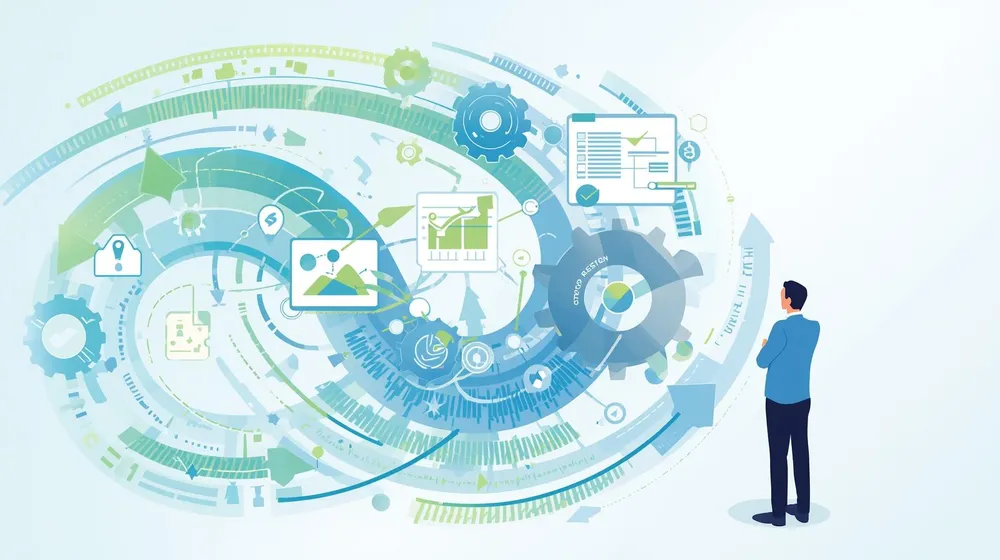
Organizations that successfully transform from tool collections to integrated systems experience fundamental operational improvements:
Employees spend time on productive work rather than manual data management. Information is available where needed without compilation delays. Decisions are based on complete, current data. Leadership has real-time visibility into operations.
Work that previously required manual effort happens automatically. Information that previously required compilation is instantly available. Integration enables capabilities that weren’t possible with disconnected systems – real-time reporting, automated workflows, and coordinated operations.
Ocean Solutions brings extensive experience helping organizations move from disconnected tools to complete integrated systems that increase productivity and reduce costs. We understand that integration isn’t just technical implementation – it’s business process design that aligns technology with how your organization actually operates.
Contact Ocean Solutions today to discuss how we can help transform your tool collection into an integrated system that increases productivity and drives costs down.